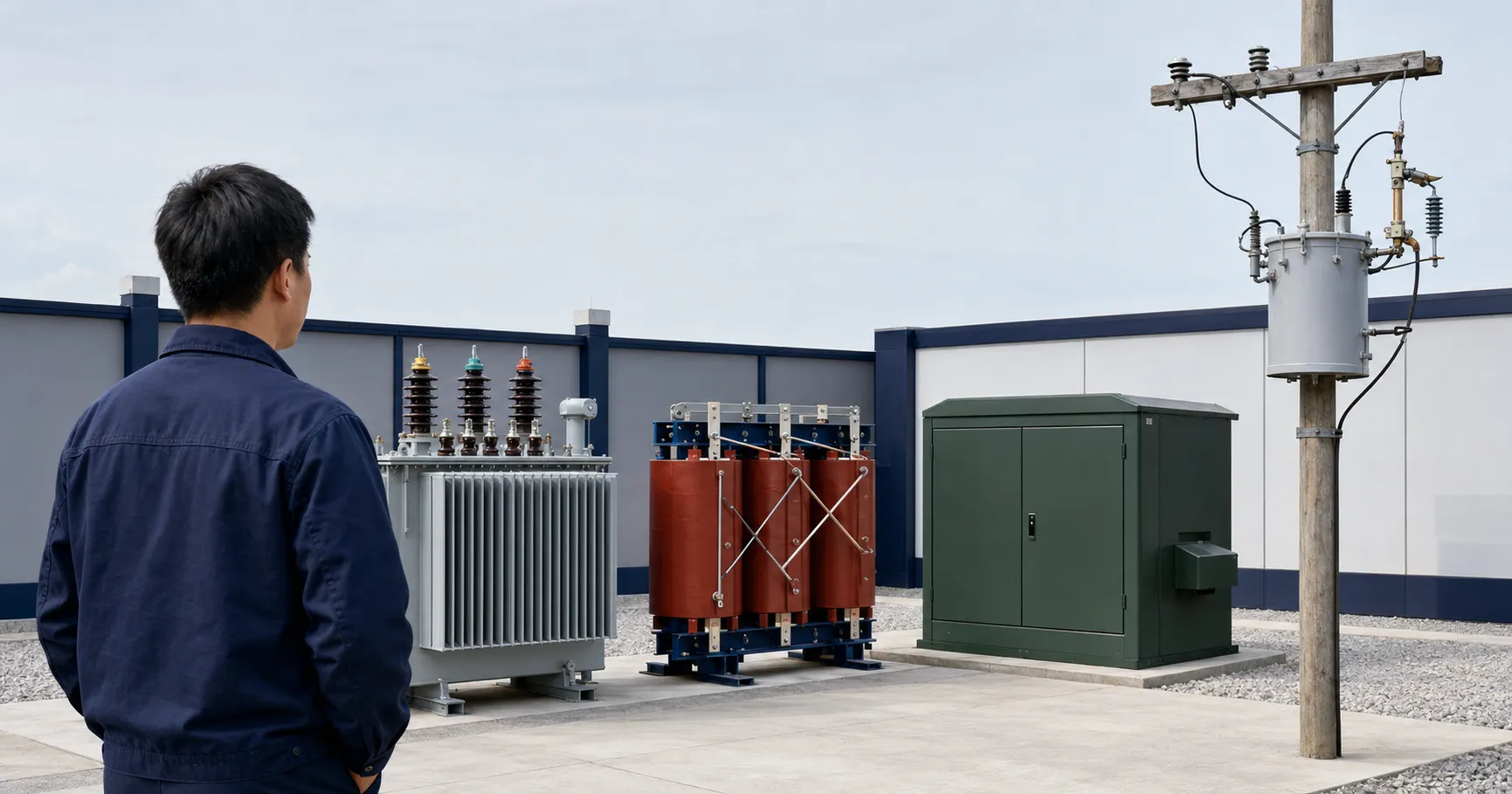
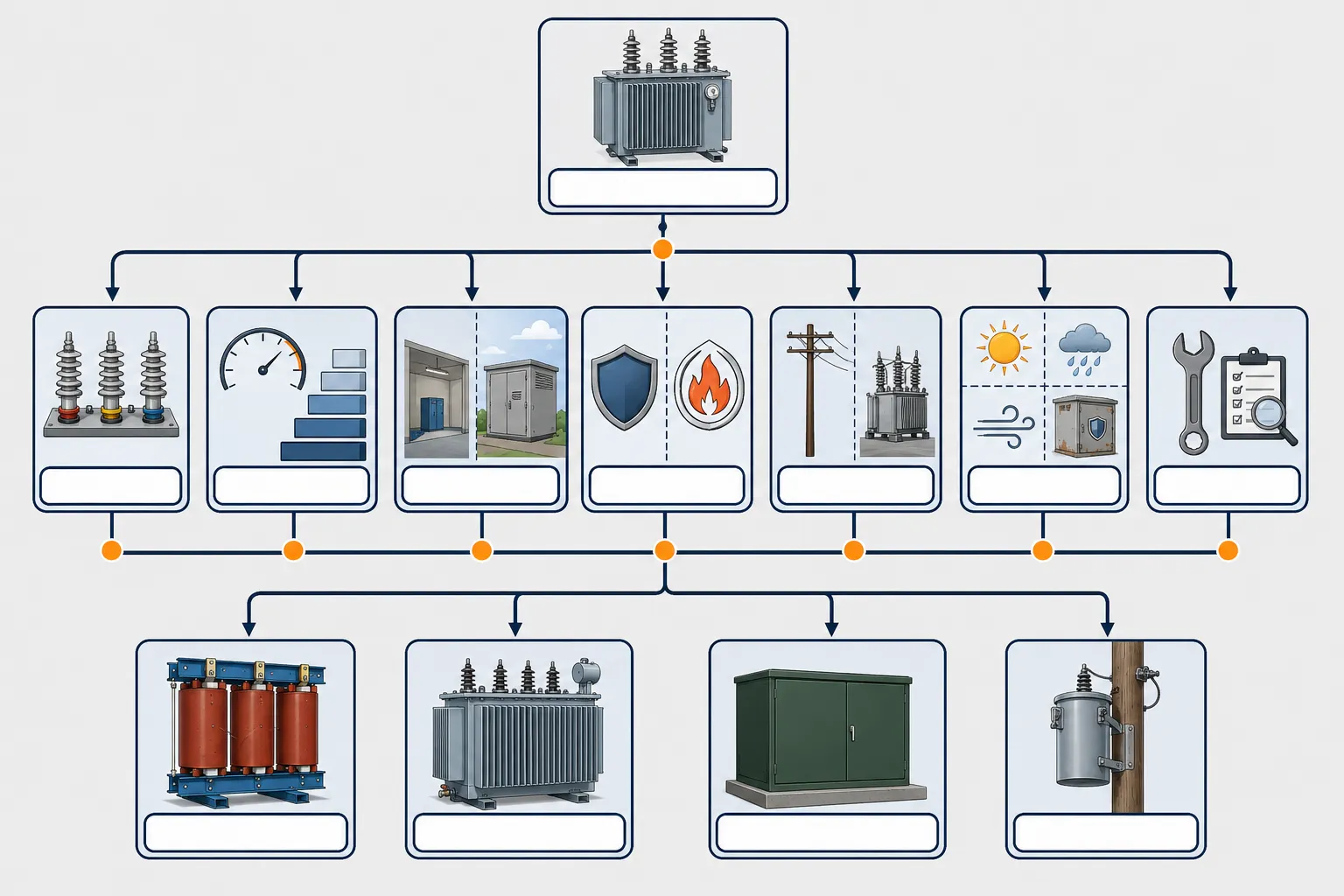
Choosing the right distribution transformer means matching capacity, voltage, impedance and cooling to your load and environment. This guide walks through every parameter an engineer or buyer needs to specify.
Technical guide overview
Key Points
1. Determine load capacity (kVA) from connected load, demand factor and future expansion margin
2. Select voltage ratio — primary (HV) and secondary (LV) matching your grid and utilization
3. Choose vector group (Dyn11 most common) based on system grounding and paralleling needs
4. Specify impedance (typically 4-6%) — balances fault current and voltage regulation
5. Pick cooling method — ONAN (oil) for outdoor/utility, dry-type (AN/AF) for indoor/fire-safe
6. Define environment — ambient temperature, altitude, humidity, pollution class