Technical Guide
Technical guide overview 
Specification reference diagram
Dry-type vs Oil-immersed Transformer: Which to Choose
Dry-type and oil-immersed transformers serve the same function but suit very different installations. The choice comes down to fire safety, location, cost and maintenance.
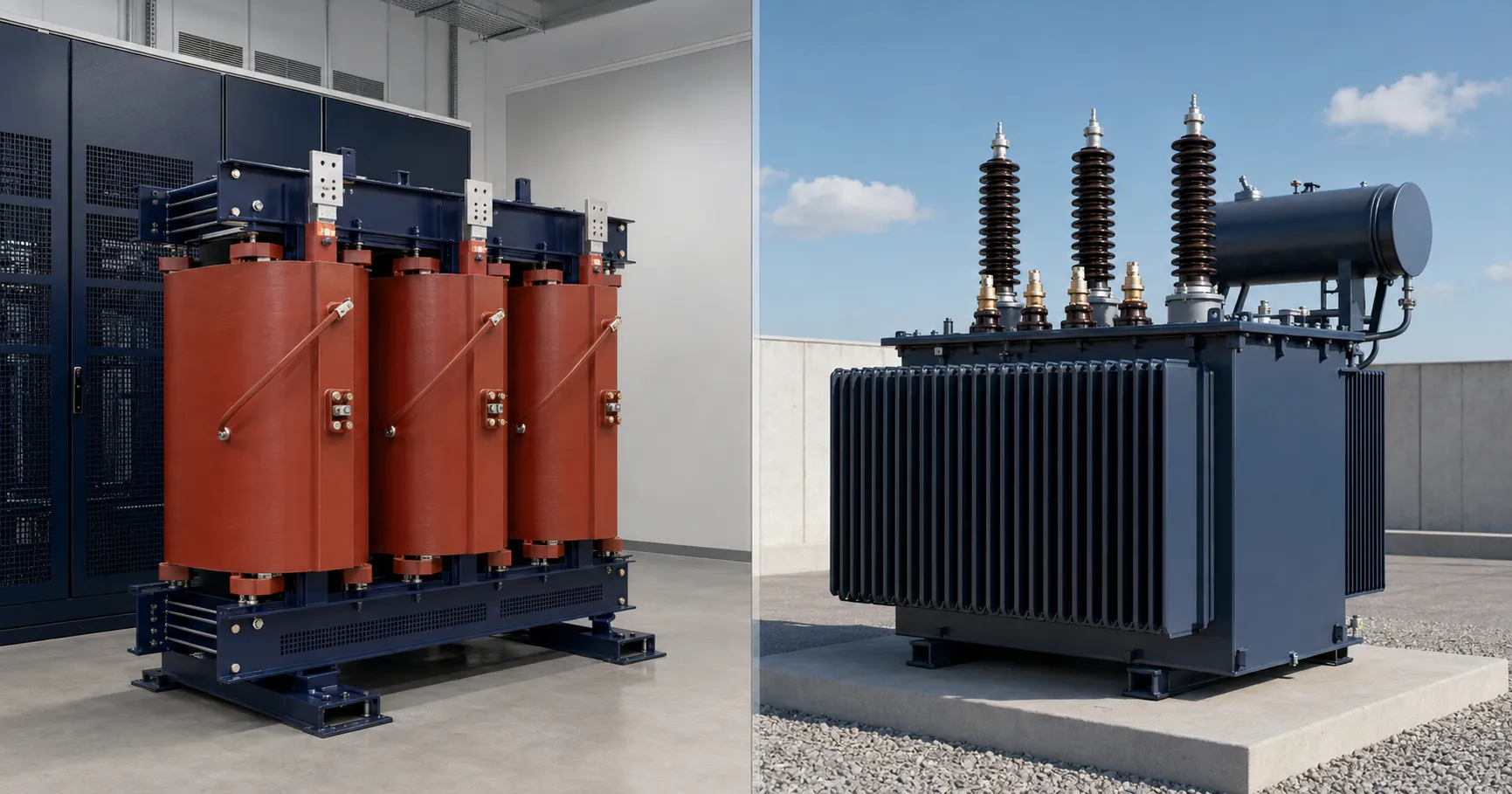
Key Points
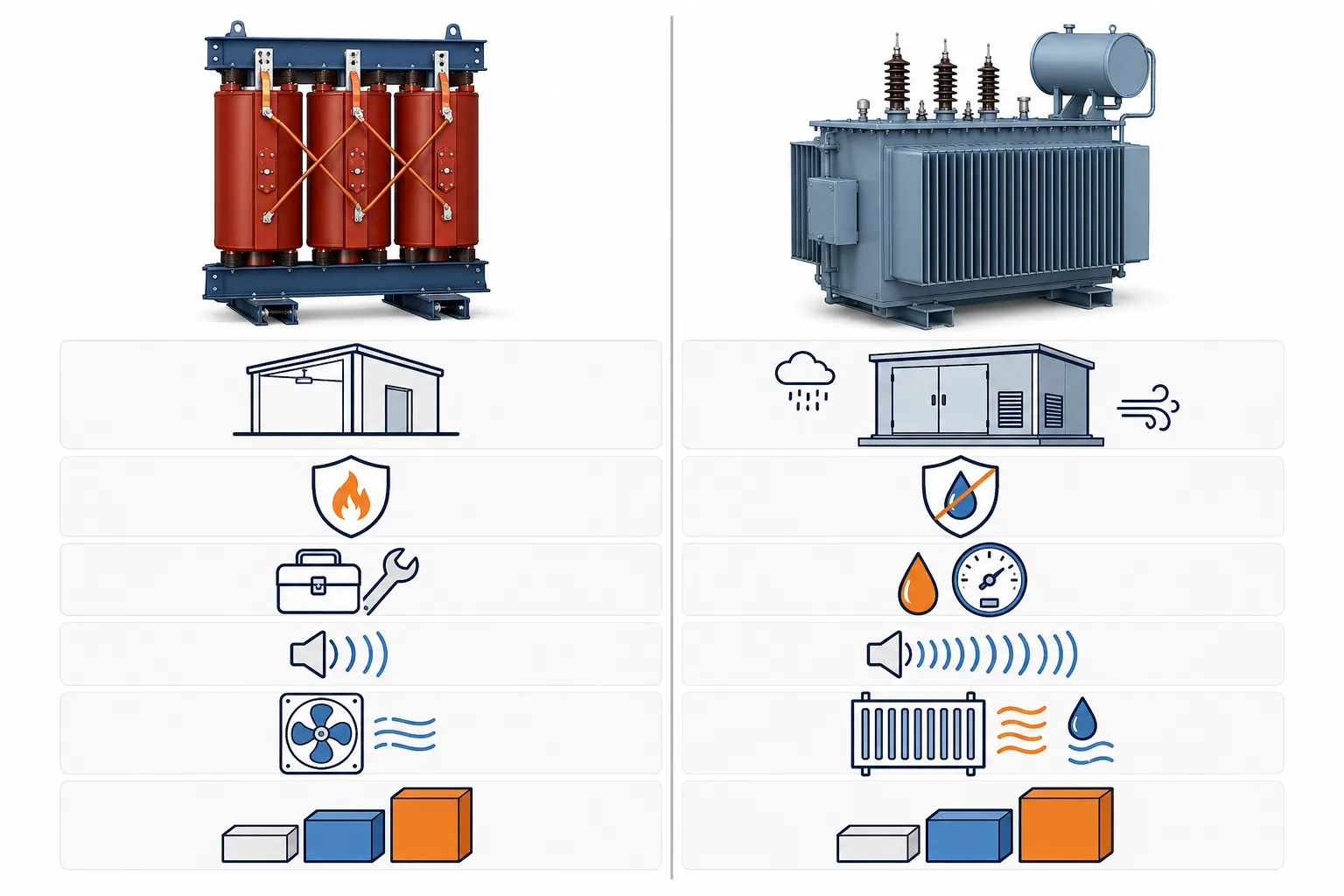
- Fire safety: Dry-type (cast resin) is fire-retardant and self-extinguishing — preferred for indoor, buildings, data centers
- Location: Oil-immersed suits outdoor substations; dry-type suits indoor mechanical rooms
- Cost: Oil-immersed is cheaper per kVA; dry-type costs 20-40% more but needs no oil containment
- Noise: Dry-type is slightly louder; oil-immersed is quieter
- Efficiency: Both can meet low-loss standards; amorphous core available in both
- Maintenance: Oil-immersed needs oil testing/filtered; dry-type is largely maintenance-free
- Capacity: Oil-immersed scales to 220kV+; dry-type typically to 36kV / 3150 kVA
- Environment: Dry-type wins in fire-sensitive, indoor, polluted indoor; oil for outdoor/utility
Need help selecting or specifying a transformer? Send your parameters — our engineers respond within 12 hours.